Faculty, Graduate


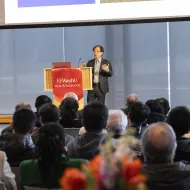
During the Spring 2026 Dean’s Distinguished Lecture, Xuming He, the Kotzubei-Beckmann Distinguished Professor and chair of the Department of Statistics and Data Science, explored the challenges and opportunities of artificial intelligence.
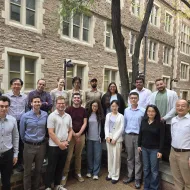
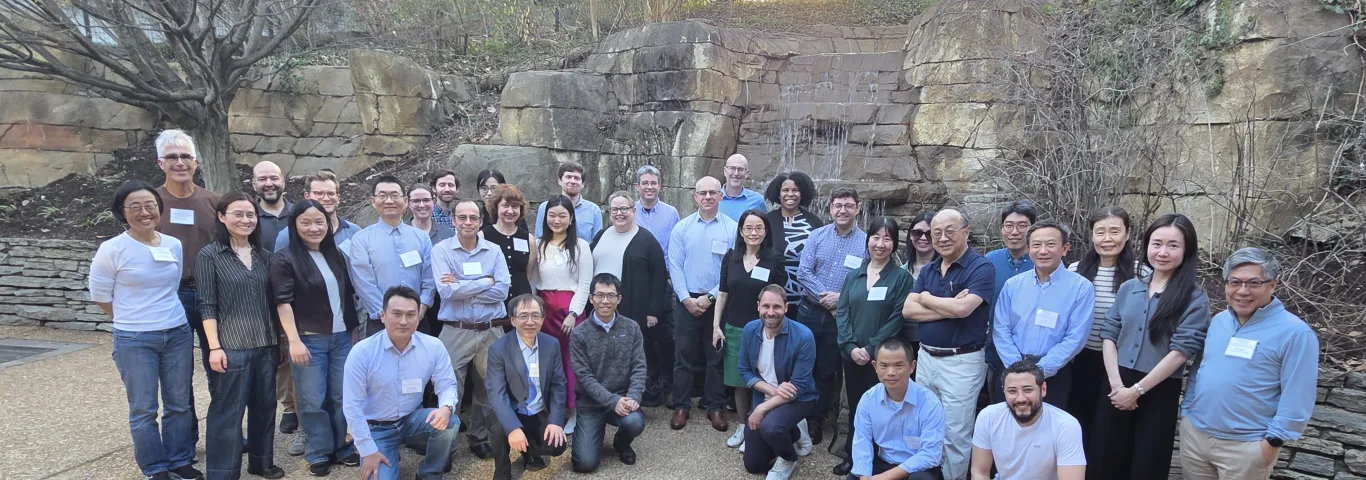
SDS faculty embraces interdisciplinary teamwork, leveraging expertise in statistics and data science to advance innovative research addressing critical scientific and societal issues of our time.
Hear from our PhD program’s recent graduate, Wei Li
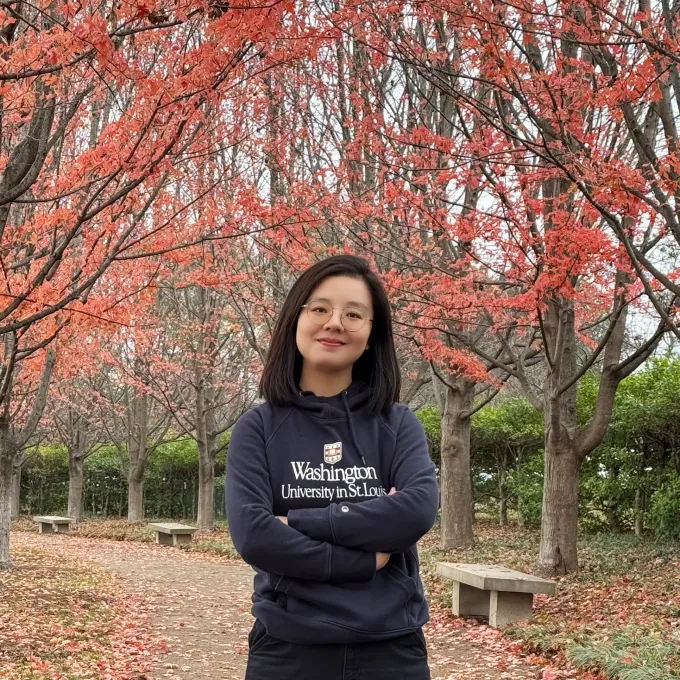
Wei came to WashU in 2021 from the University of Glasgow, after a one-year deferral due to the COVID-19 pandemic. She chose to pursue her PhD in Statistics due to a lifelong love of Math- particularly its’ factual, objective nature.
During her time in the department, Wei learned how to balance her life and how to be independent. As an only child of “the lonely generation” coming out of a global pandemic, she was surprised to find that being a PhD student in SDS meant being part of a community. “The friends I’ve made here are beyond my expectations... there are so many favorite moments that cannot be replicated,” she shared. “In the moment, you don’t realize that you’re making memories, it’s only when looking back that you realize how important those moments were.” Wei talked about taking first day of school photos with her friends, how proud she felt when she submitted her first paper, and how surrounded by support she felt when so many of her peers showed up to congratulate her after she defended her thesis.
After she graduates this Spring, Wei will relocate to the University of Madison- Wisconsin, where she will work with Dr. Yinqiu He as a postdoctoral researcher. Her PhD advisor, Dr. Robert Lunde, met He at a conference, and later connected the two. Wei’s research focuses on network analysis, and bridging gaps due to dependency. When she spoke with Dr. He, Wei felt that their research would align, and drew connections to illustrate how she could help further Dr. He’s work.
Wei emphasized the importance of networking- from her initial decision to come to WashU, to her upcoming postdoctoral appointment. “The support of others made me feel like I could do it”.
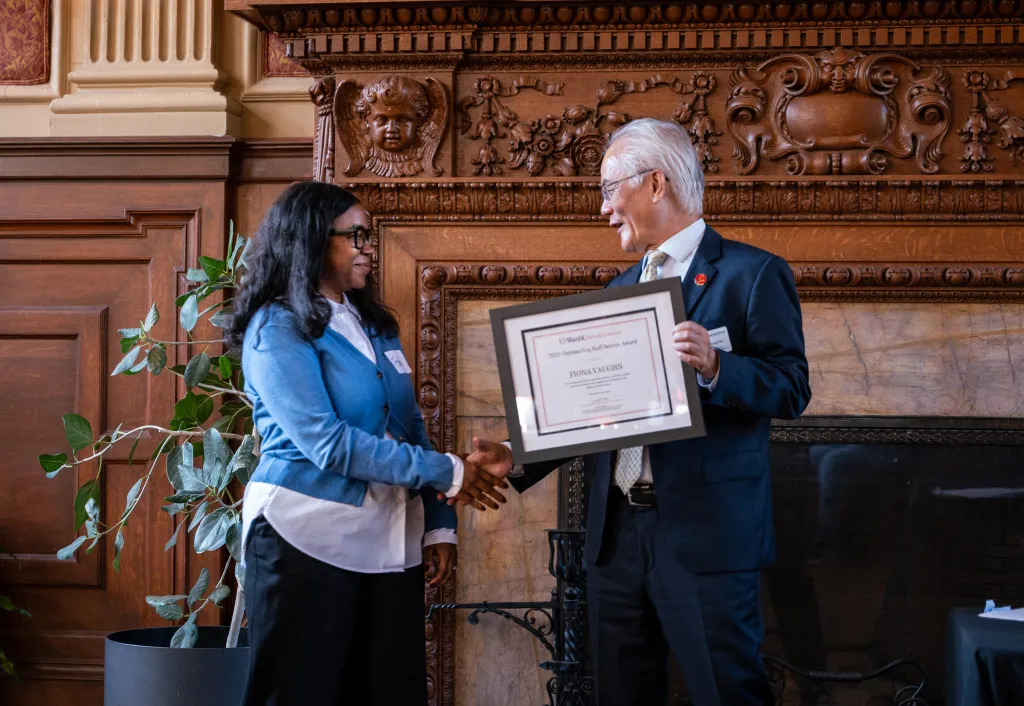
She was honored at a ceremony in Holmes Lounge on October 14th, 2025, along with the other 2025 faculty and staff awardees.
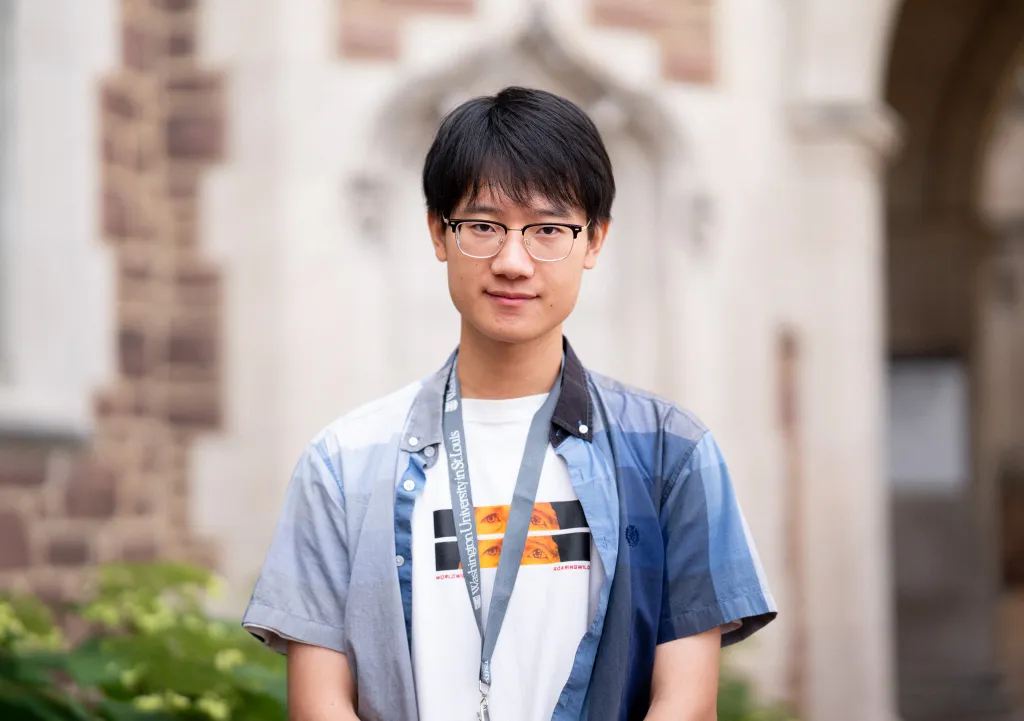
Yiqiao Jin, a second-year PhD student in Statistics & Data Science, has been selected to receive one of the International Biometric Society Eastern North American Region’s (ENAR) Distinguished Student Paper Awards.
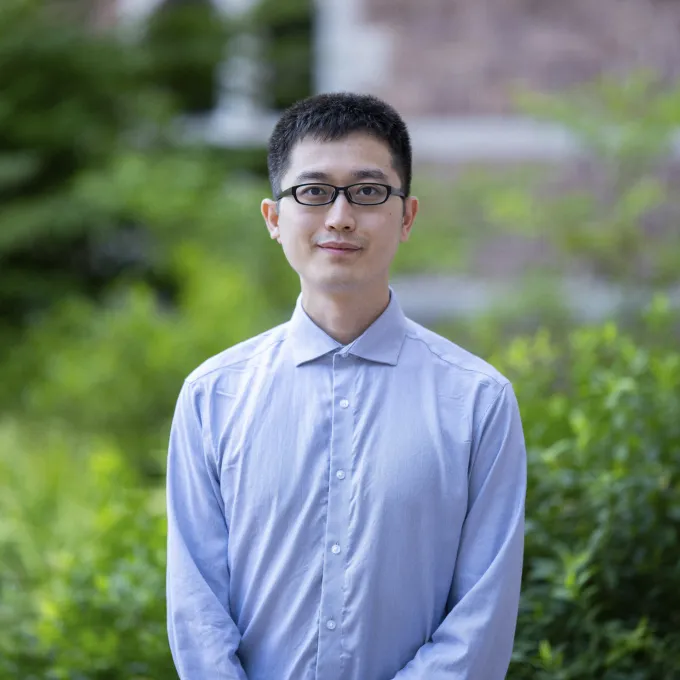
Dr. Cheng’s research lies at the intersection of causal inference and machine learning, with the goal of developing methods that are both theoretically rigorous and practically implementable. One central theme of his work is integrating semiparametric inference tools with modern machine learning algorithms to improve robustness and efficiency when studying complex causal effects, including mediation effects, quantile treatment effects, and network or interference effects. One of his long-term goals is applying these methods to health data settings. Ultimately, he aims to develop causal methods that preserve statistical rigor while remaining directly relevant to real-world scientific and policy questions.
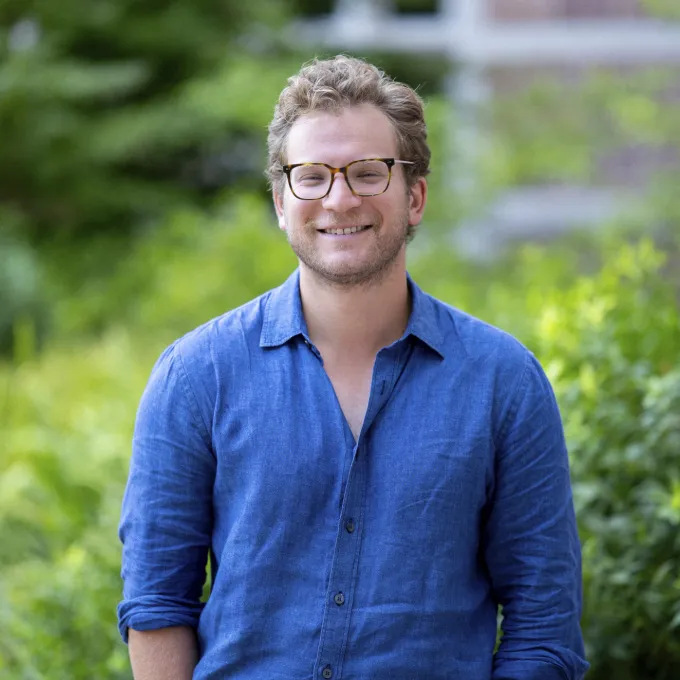
Dr. Feldman's current research takes place at the intersection of Generative AI and statistical inference. “We develop ‘light-weight’ deep generative models that retain the expressiveness of modern AI tools but are more statistically interpretable. I truly believe that statisticians will play a pivotal role in both education and research in the AI age. Statistical tools and methods are more important than ever when it comes to understanding, fundamentally, AI systems.”
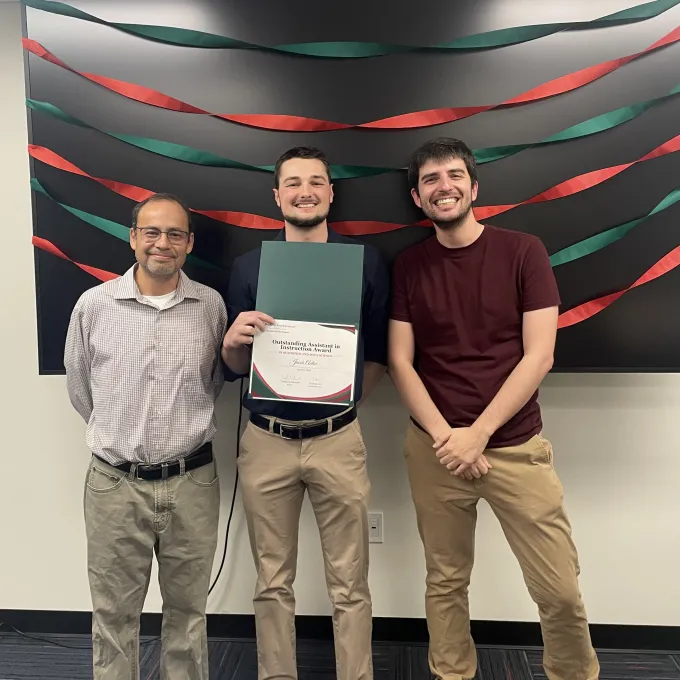
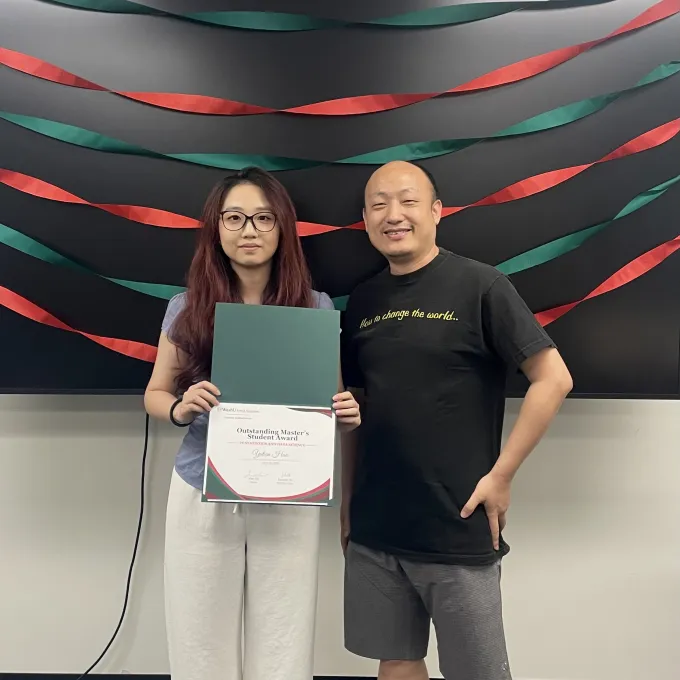
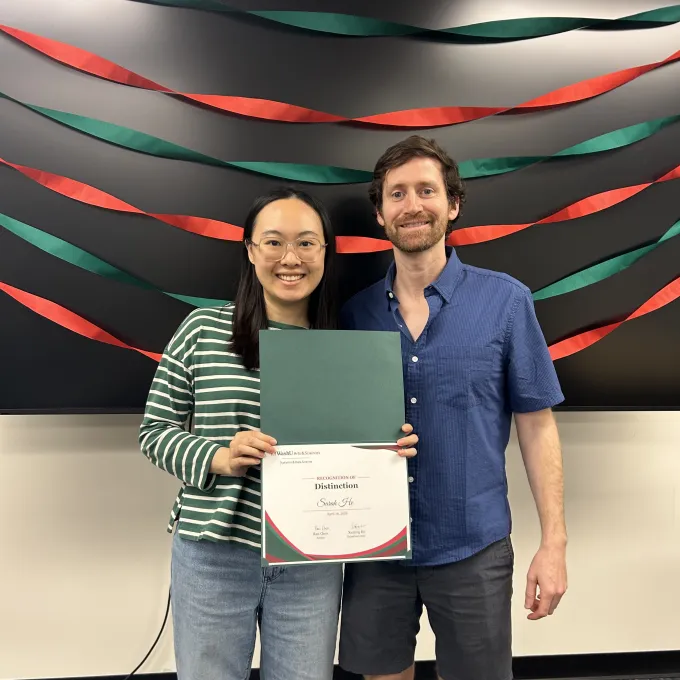
On April 16, 2026, the department came together to recognize the hard work of the undergraduate and graduate students in our programs
José Figueroa-López, Jacob Antici, and Vasileios (Bill) Katsianos
Yutian Han and Nan Lin
Sarah He and Joe Guinness
Among many other speakers during Fall 2025 and Spring 2026, SDS hosted our distinguished guest speaker, Xihong Lin
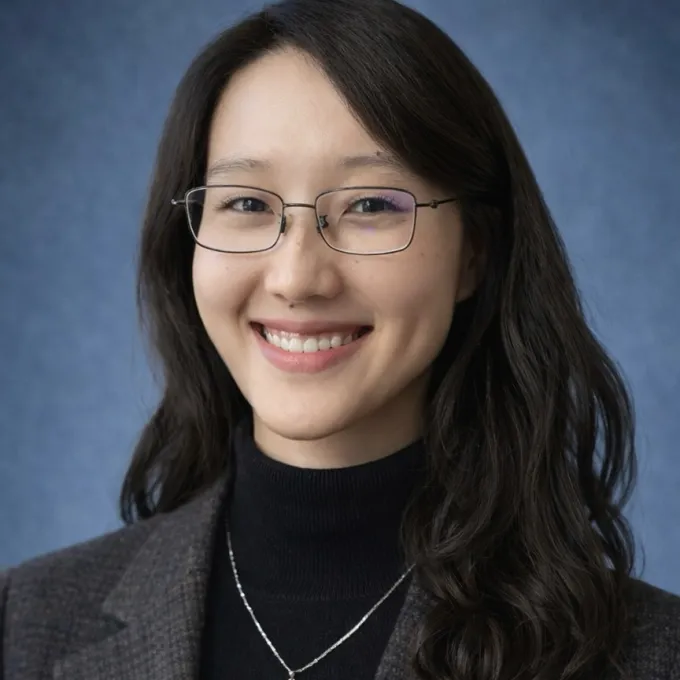
You can view the full version of our Spring 2026 Newsletter by clicking the button below.
Spring 2026 Newsletter